- 1PD Ops Club
- Posts
- Hey, How Much Revenue Did Your Ads Actually Drive?
Hey, How Much Revenue Did Your Ads Actually Drive?
Feels very personal, but I want you to ask this to yourself

Sariga V Gangadharan
February 11, 2026
Hellooo,
Running ads. Getting conversions. Seeing revenue come in.
So how much money did you make through campaigns? (now look at that dashboard)
Most dashboards show what converted. They rarely show what revenue your campaigns actually created.
Your dashboard speaking: Hey , campaign A, 250 conversions… woowww… awesome right?
Real question: How many paid, how many never cancelled, how much revenue made…
Say you had 250 conversions from Campaign A; great!
But if 37% returned the products and 22% converted without ads, then most of that “success” isn’t actually because of the campaign.
That’s where incremental revenue comes in and that’s the focus of today.
Incremental revenue is basically answering one uncomfortable question:
“If I didn’t run these ads… what revenue would not exist?”
Because not every conversion is because of ads. Some users were already going to convert. Some came back on their own. Some would’ve paid anyway.
And attribution dashboards don’t tell you that. They just take credit.
This is exactly what happened with W for Woman.
On paper, things looked fine. But when they zoomed out, one question kept popping up
Are we actually creating new revenue or just taking credit for existing demand?
Pixel-only tracking was giving incomplete signals, like baking half a cake and calling it dessert.
The results showed: Campaign-level ROAS ~ 1.8x and only ~25% of conversions could be confidently tied to specific channels
So instead of asking “Which campaign converted this user?”
They flipped the question to: “Which users converted because of ads?”
WforWoman started tracking users after they converted.
Instead of trusting last-touch dashboards, they connected ads → users → payments → retention with first-party data.
As a result:
Channel-level attribution clarity rose from ~25% → ~80%
High-value behavior tracking (repeat purchases) improved from 30% → 75%

Audience segmentation efficiency (new vs repeat buyers) improved 2.5x

Tracking non-discount vs discount buyers rose from 20% → 70%

The “aha” moment
Once server-side data and incremental revenue became the baseline:
Custom audience match rates jumped from ~25% → 80%+

ROAS for top-performing segments improved by ~35%
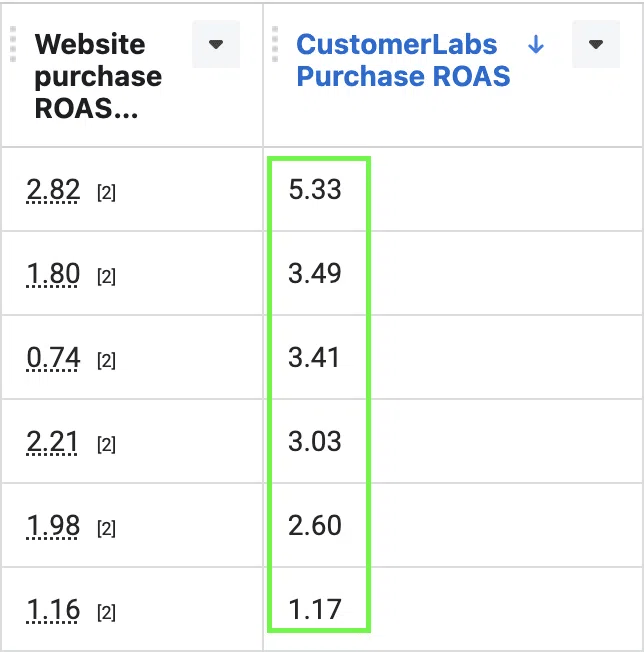
Read the full case study here Or if you’d rather see how this would work for your setup, hop on this call.
Because scaling ads without proper attribution is just expensive optimism
Reply